Full disclosure: John Mellencamp’s grandmother and my paternal grandmother were cousins, so I guess that makes us – what? – second cousins twice removed, or something? Don’t ask him, I’m sure he’s never heard of me.

In any case, the fact that we’re loosely related may have colored my opinion, but, over the years, I’ve grown to love his work – at least in concept – and was fascinated by this story on NPR’s Morning Edition, earlier this week: http://www.elabs7.com/ct.html?rtr=on&s=fj6,mqgz,dv,f2fy,cnwq,g1zw,l3bv

Born with spina bifida, Mellencamp got off to a rough start in life, but has managed to become something of an inspiration to many people, from towns large and small. At the same time, he’s developed as a musician in spite of in his phenomenal success.   

As a fan and someone who shares a very little bit of his DNA, I can appreciate Mellencamp's eclectic musical taste and demand for authenticity.  Lord knows he's paid is dues in a very tough business, and he certainly has a right to look back on his roots, musical and familial. After all, in the 1840s,  his ancestors waded for miles up the White River to the White Creek (in what is now called Indiana), where they cleared the land to build a community. A century and a quarter later, Mellencamp ran away from that same spot, only to return home rich enough to buy up much of the town. What a story!  Go John!

Here’s a review of his latest album, from Rolling Stone:

No Better Than This
By John Mellencamp
 
No Better Than This is John Mellencamp's debut on Rounder Records, the legendary indie label specializing in roots and Americana music. The entire album was recorded with Mellencamp and his band all playing live in one room using a 55-year-old Ampex tape recorder and just one vintage microphone. Legendary producer T Bone Burnett captured the 13 new tracks at three historic locations: Sun Studio in Memphis, Tenn., (where Elvis Presley, Johnny Cash and Jerry Lee Lewis first recorded); the First African Baptist Church in Savannah, Ga., (the oldest Black church in North America, dating to 1775); and in Room 414 of the Gunter Hotel in San Antonio, Texas (where Robert Johnson made his first recordings in 1936). Mellencamp's songs on No Better Than This reflect classic American musical traditions including blues, folk, gospel, rockabilly and country, while addressing such themes as the need for hope, the nature of relationships and narratives that recount extraordinary occurrences in everyday life.
 
"No Better Than This shows Mellencamp channeling spirits and stepping into period styles. They fit him perfectly." ~Will Hermes, Rolling Stone


Picture
My grandchildren just might grow up thinking people don’t kayak or ride motorcycles until they are very, very old.

Right?

My grandmothers were age 54 and 65 when I was born. As far as I know, neither one ever drove a car, took a trip that didn’t involve visiting family, or chose to exert themselves to stay fit. They didn’t need to, work took care of that.

My grandfathers drove, but one died before I was born and the other was someone I heard more about than ever got to know first hand.

Whether I knew them or not, it’s safe to say my grandparents never traveled to another country, learned a second language, kayaked, swam for the fun of it, ran in charity races, took dance lessons, wrote a book, or took photos of their grandchildren.  

If you’re old enough to have grandchildren, what do you do that you’re sure your grandmother or grandfather never had a chance to do? 

Nana and Grandpa kayak at Adams Reservoir, Woodford, Vermont, 08/07/10

 
Doubleheader 08/08/2010
 
Pardon the grandmotherly exuberance, but how many people do you know who add two babies (not twins) to their family in one week?

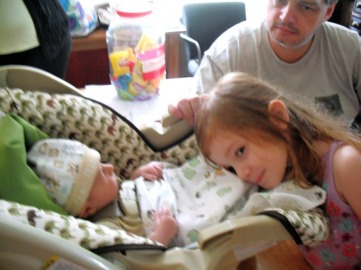
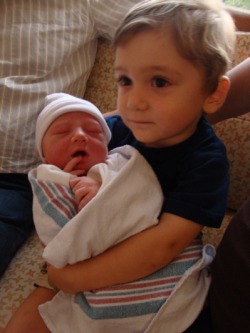
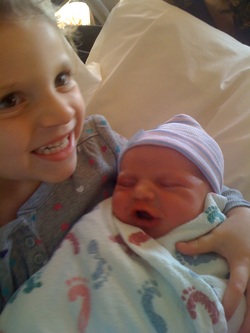
Two new baby boys—Griffin and Mason—came home from the hospital this week to their respective homes, where their siblings got the first inkling this new baby thing wasn’t quite what they expected.
Picture
Picture


Picture
UPDATE: Two new boys born in our family the same week! Such a blessing! Makes our hearts sing.  Thanks for the comments and good wishes.
----
I'll be offline for a few days, thanks to new grandbabies arriving in two different states, bringing our total to five (!). One down, one to go. Life is very, very good.


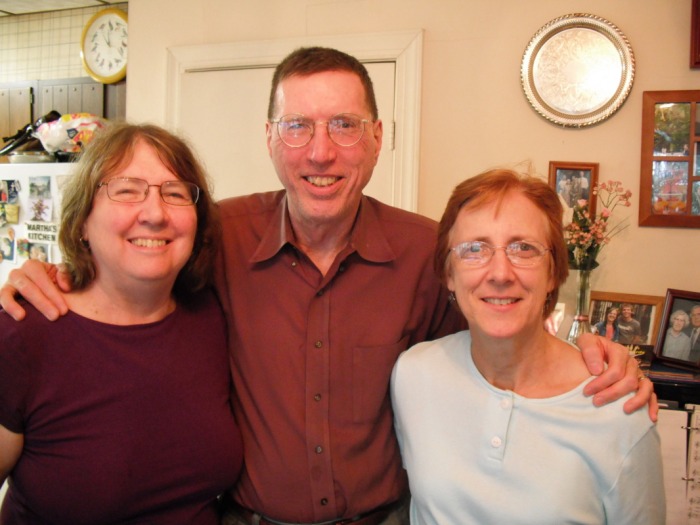
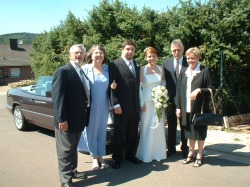
Here’s a little show and tell. Below are photos of my husband and myself, our siblings,  plus my brother-in-law's significant other and my brother's wife. We’re a pretty typical American family, at least in terms of our own generation.

But, we're the old generation, destined for extinction. Fortunately, we have 11 grown kids among us, which means we have a pretty good toehold on the future. 
 
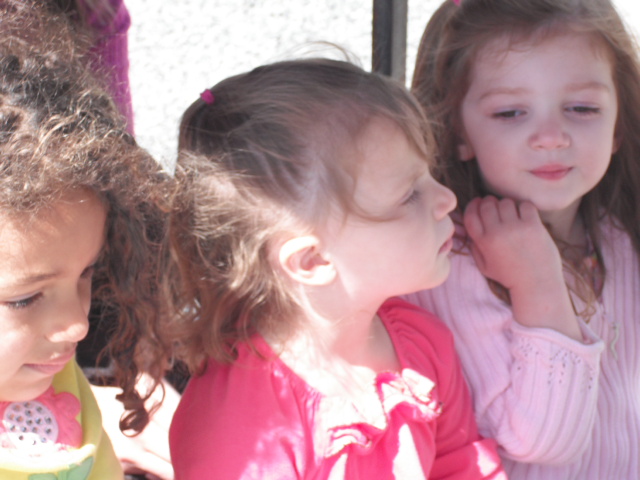
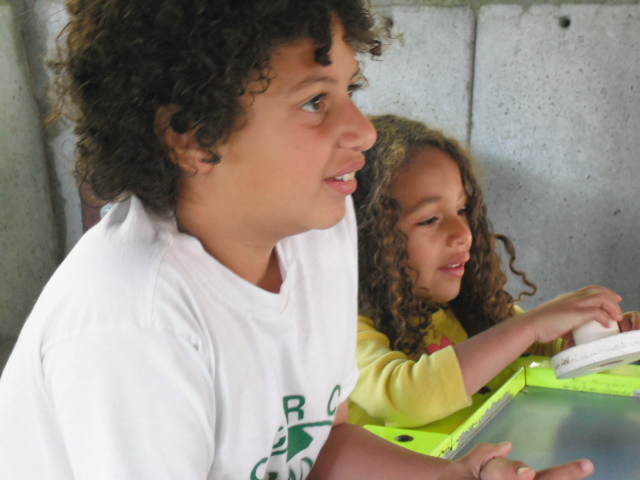
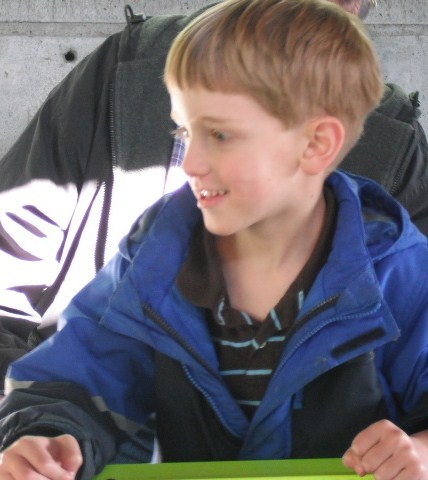
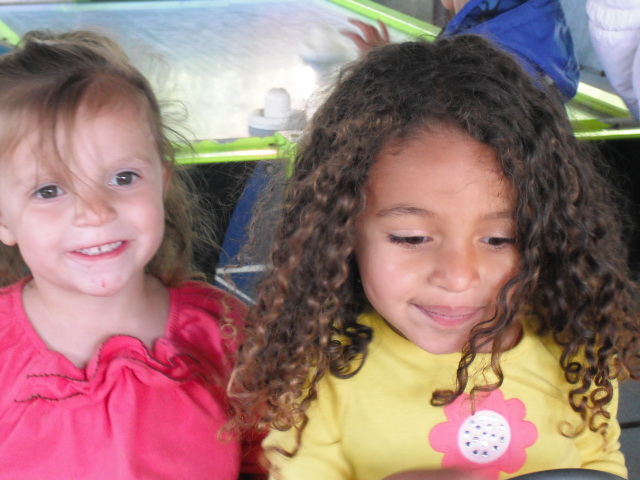
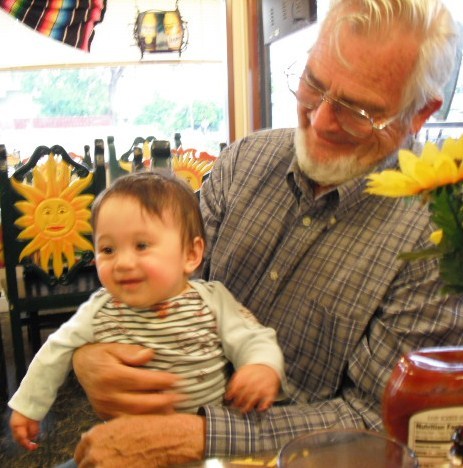
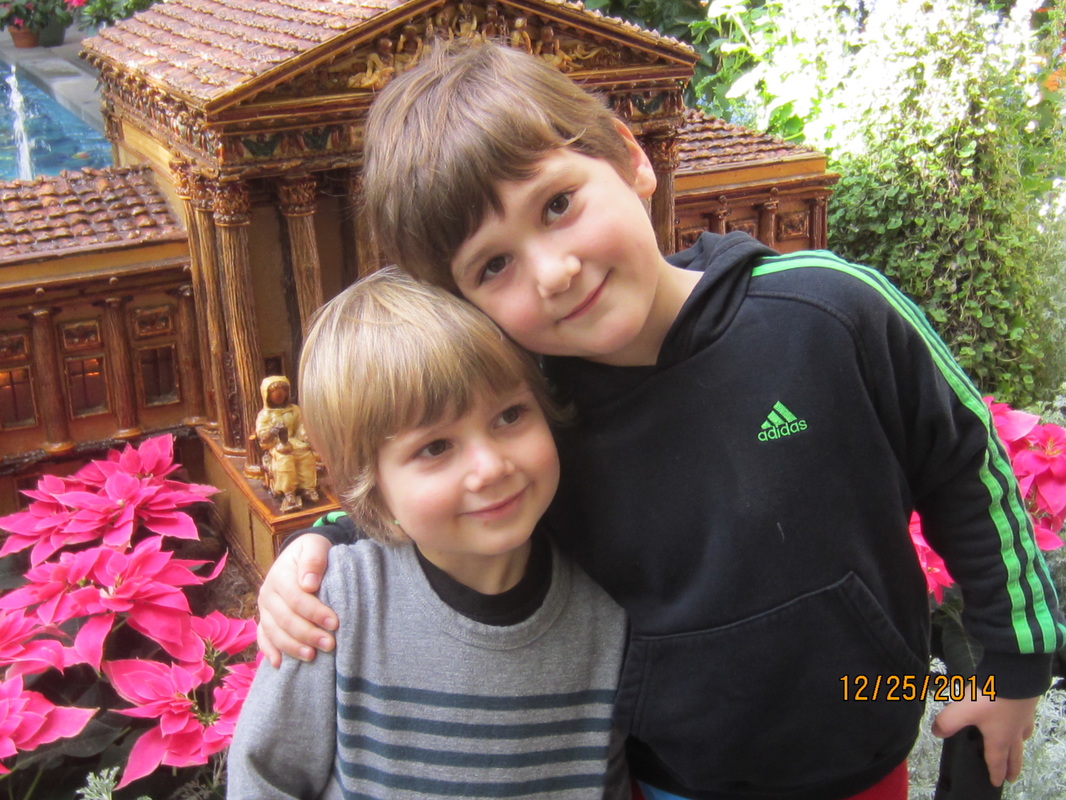
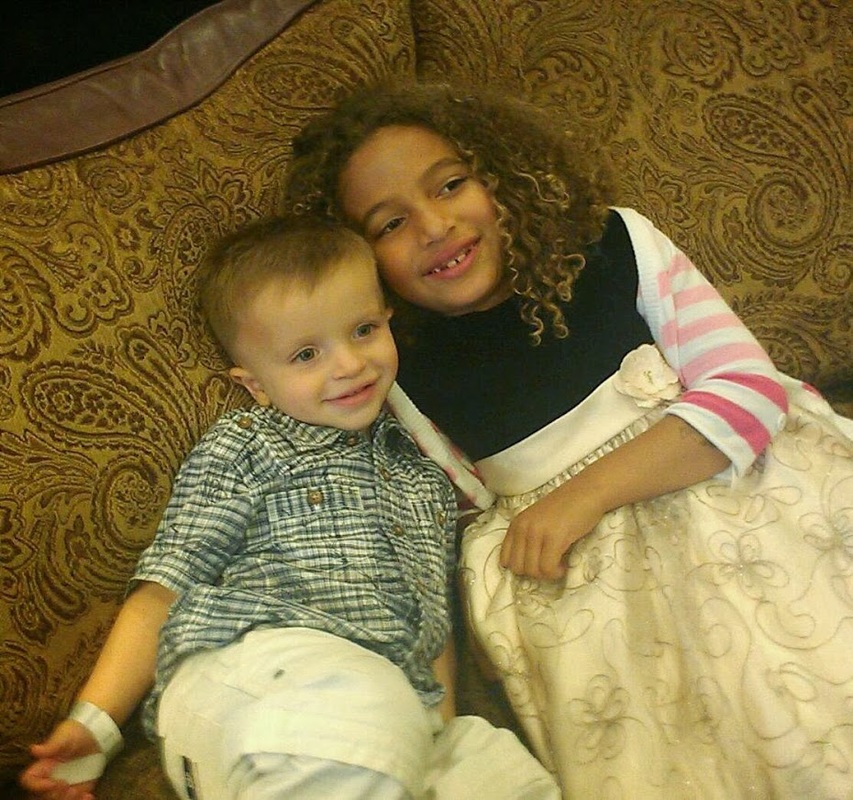
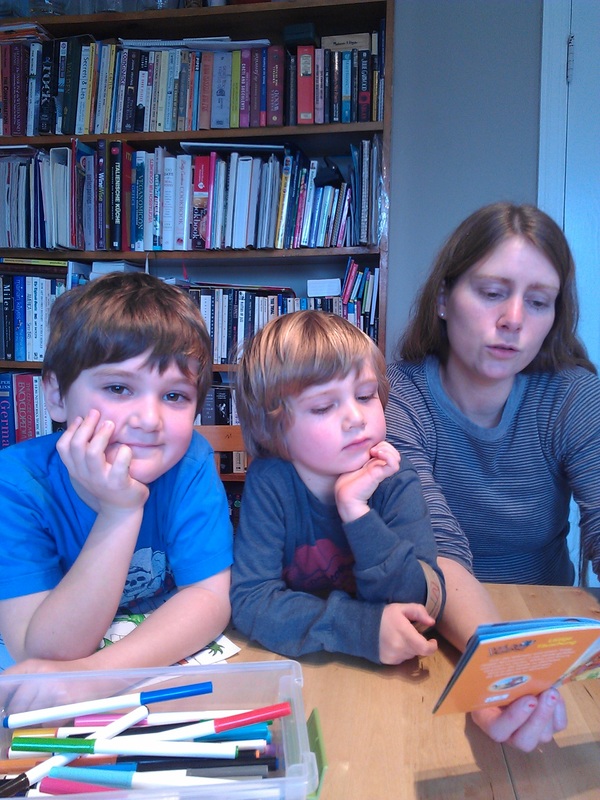
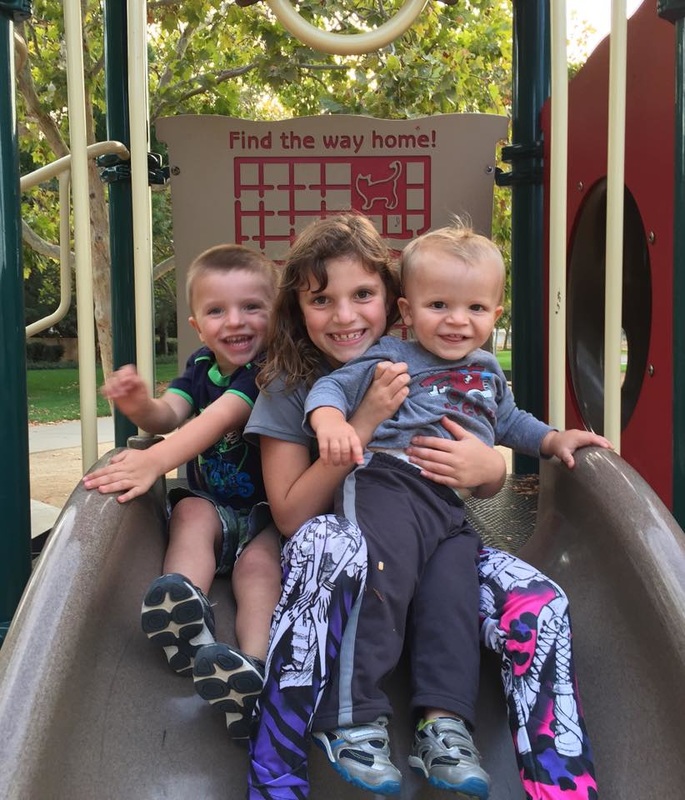
Skip ahead to our children’s children and two of their cousins. Some of these darlings have parents from Mexico, Germany or from Philippine or African-American ancestry. Soon, there will be more grandchildren. And, there is the possibility for even more cultural diversity when the last few kids finally marry and start families.

If you want to see what the US population will look like in the near future, just look at our next generation  -- a rainbow of colors, languages and traditions, all within one ordinary US family.

Are they beautiful or what? This is tomorrow, folks, taking the best from us and our ancestors, and putting it forward. 

Yes, the face of the US is changing, but that’s not a bad thing. Nations evolve just like living organisms. Life goes round and round. Don’t fight it,! Just sit back, click on the video below, and enjoy.

 
Family man 09/02/2009
 
Aside from those few words we shared at the symposium in 2003, here is my Ted Kennedy memory: 

In 2006, I contacted Kennedy’s office to ask a favor for a dear friend who had spent her life caring for children from war-torn environments. Lynn never forgot how Ted Kennedy convinced an international adoption agency in 1973 to let her adopt a half-starved child from what is now North Korea, in spite of the fact that she was young, single and worked full time as a teacher.


She was a very religious person and had spent a year in Zimbabwe, doing mission work, her own version of a year in the Peace Corps. She came home determined to help  young children who had been left behind as victims of armed conflict, or were simply unwanted in the first place. 

In her mid-twenties, Lynn began adoption procedures while she was engaged to be married, but when marriage plans fell through, she was told didn’t qualify as an adoptive parent.


Determined to adopt a child she had sponsored for through an international charity, Lynn called on the junior senator from Massachusetts for advice. Ted Kennedy talked the agency into letting her complete the adoption.

Thanks to him, she was the first single person in the state to do so. And thanks to him, in 1975 she got special permission to travel to Southeast Asia to bring home a Vietnamese orphan, one of the lucky ones to escape Saigon on one of the last planes out. Later, Lynn adopted more children, all from places rife with war or poverty.  

Click on Read More (below, right) for the rest of this story.


Ann Sentilles has an interesting post on her blog, The Third Third, about the phenomenon of adult children moving back in with their parents, due to the tough economy. She's writing off a New York Times story, saying it that piece "should, probably make us all stop and think about what we're willing to do under the aegis of 'family' and what's healthy and what's not." See Caught in the Safety Net for the NYT story. Go to the blog section of The Third Third to see what Ann and her readers have to say on the subject.

Come to think of it, I was one of those bratty returnees who lived with (or off) my parents for a period of about six months, long ago. Yes, they provided a safety net, and I would never deny how grateful I was for their support. But, in my case, those few months reflected the most compassionate parenting they ever provided to either me or my brother since our birth, and luckily for me, they did it when I really, really needed it.

The week of my 30th birthday, I arrived at my parents’ home dangerously thin, battered and bruised, carrying my 20-month-old son. It wasn’t my choice to move back in with them, but I had run from a dangerous situation, had no money and no other choices. Believe me, I had already surveyed friends with spare rooms, and no one was willing to take us in. That’s what parents are for, they said.

It wasn’t easy for me to ask for help, since I had fled their home when I was 17 and married – against all their good advice – at 19. Now, here I was knocking on their door. 

At first, living with my folks was like being on a very low-budget vacation. The two of them scurried around trying to make the baby and me comfortable. They let me sleep. They bought a stroller. They showed us around the town they had just moved to, and introduced me to some of their friends. My dad built a sandbox in the back yard. My mother talked about quitting her job, so she could “help with the baby.” 

Mostly, I remember feeling somewhat horrified, like I had moved into an assistant living center and my parents were recreation directors. Thinking back, I realize they both were in their late 50s, and still very much in the workforce. At 30, you don't know much.

For the first few months, my mom and dad provided a room, food and disposable diapers with the understanding that, as soon as I had income, I would pay for my own stuff and chip into the general fund. Until then, I offered to cook and clean, do laundry, run errands, take them to and pick them up from work, and do anything else they needed. I expected them to be happy with that. They weren’t. They let me do the errands and driving, but they didn’t like my cleaning technique or the (organic) food I cooked. So, I just kept out of their hair. 

Soon after my boy and I got there, I went into high gear, knowing our days at their home were numbered. Got a haircut, driver’s license, library card, babysitter, promise of a job, all in the first 6-8 weeks. After that, we left for three months so I could finish graduate school with some money I borrowed from my dad (and paid back as soon as I began teaching the next fall). The baby and I shared a dorm room and ate in the dining hall, while I studied and worked on my master’s thesis. Then, it was back to the folks’ and the start of a full-time teaching job. 

A little over three months into that job, my mother announced it was time for us to leave. She told me this around Christmas, setting February 1 as our drop-dead moving date. I was shocked, but understood their need to regain control over their living space. Not that we were really hard on it. I had borrowed an old car from a friend, took the baby to a babysitter every day (even though my mother had quit her job to help), and made monthly contributions of almost half my paycheck to the food/shelter fund. I thought we were leaving a pretty light footprint, but I guess not. They needed their space. It was understandable. 

Until she died last year, my mother told the story over and over again about how she “almost raised” my son. After all, he lived in their house when he was a baby! 

That’s not how I remember it, but, hey, whatever floats your boat. Thanks, Mom and Dad! 


When I was little, I remember wondering why our family wasn't anything like the Nelsons, or other folks on television sit-coms. (My brother recently told me he asked the same question, so I guess I wasn't imagining things.)

My mother never wore an apron or greeted us with a smile when walked into the kitchen for breakfast. Au contraire!

We didn't go on picnics or play ball with Dad on Saturday afternoon. What was wrong with us?

Well, plenty, but nothing I was going to understand at age 10, 20 or even 30.

I just read Ann Patchett's novel Run, and in it, she cleared up much of my confusion. You know a novel is great when it helps you weave together disparate themes running through your life, then tie them into something  that makes sense. Run gave me just that type of epiphany, or Ah-Ha! moment. 

The novel covers roughly two days in the life of a contemporary Boston family that has never quite recovered from losing the wife/mother to cancer, 20 years earlier. The three sons -- two adopted -- are all bright, but involved in lives their father doesn't understand and can't quite condone. He's a former mayor of Boston, who fully expected at least one of his children to follow his path into public service. To his dismay, not one of them is even slightly interested in politics. 

A traffic accident changes everything, and the individual parts of this family are parsed, turned upside down, and reconnected. 


All in all, the family comes out stronger than it ever was. I won't go into the details because that would ruin the fine, uplifting story for those who want to read the book, which I'd highly recommend. 

What I took away from Run is this: Sometimes bad luck brings a good outcome, but you have to be alert to notice, and you must be open to change.

It says, if you're very, very lucky, you might get that big, warm family you always wanted and never thought you'd find. Maybe not forever, but at some point in your life. Warning: your ideal family might not look exactly like you expected.

Since my boy was raised as an only child in a single parent home, he longed for a brother. An older brother. It tore my heart out when he begged and pleaded, as only an 8-year-old can, for someone to play ball with, someone to look up to and learn from. With the straightest face I could muster, I told him it would be hard, but I'd try to find one for him.

Twenty-two years later, I came through with the goods. He and John, my new husband's oldest son, bonded almost instantly and, to this day, call each other brother. Who knew?

That should have been the first sign that luck was about to come my way, but I wasn't paying attention. It took years for me to notice that new lines of connection develop with each change in a family.


Each death ended one relationship and changed many others. Each divorce reconfigured family alliances. Some estrangements, although painful, ended up being benefits, in the long run.

Today, I'm very fortunate to have a larger, warmer, stronger family than I ever dared to dream of.

Since I grew up in a conventional, two-parent, two-kid household, at a time when traditional lines were all that counted, I never expected divorce to come my way, especially twice. Nor did I expect to remarry, especially not the last time, at 58. 

Today, not only have I gained three wonderful new children -- thank you Dave and two of his former wives! -- but also their spouses and children, not to mention two additional siblings, one with a spouse and four grown children.

On my side of the family, my son's in-laws are important to us, although they live in Germany. We've visited, they've visited; we write, they write. It's great. 

My son also has a half brother who's integral to our lives. 


In 2003,within a six month period, I remarried, my ex-husband died, and our son got married in Germany. Which brings me to my first husband's third wife. Although she and I had not met before my son's wedding, the two of us took that happy day to form a unique and important bond, one that helped both of us move ahead in our lives. 

When I think of my family, as I did during the dreaded birthday week, these are the people I think of. These are the folks who count. And, none of these relationships would have been possible -- for me, at least -- without the reconfiguration of alliances that came with those accidents of life that take people away, or change the way they participate in the lives of others.

Once, survivors felt obligated to strictly maintain the family boundaries, long after the death of one of its members. That’s no longer the case.


And, In high school health class, we learned that divorce always "broke" families, right? Many of us found that to be untrue, through experience.

Once we got out on our own and built our own lives, we learned the hard way that blood is not the only family cement. In fact, sometimes the weakest links are those that follow bloodlines. 


Contrary to the old adage, you CAN pick and choose your relatives, and that's a good thing.

Our generation has tossed the concept of family on its head. We experienced divorce and remarriage on a scale unimaginable to earlier generations. We embraced the value of same-sex relationships, and single-parent adoptions. The choices we made over the last 30 years changed the very face of the family, maybe forever. 

As a result, many of us have spread our wings to take advantage of what life has brought us in the form of children-not-our-own, new grandchildren, new siblings, new "relatives" with no particular familial designation.  

Those who make our lives richer for being there are the most important people in our family, and that's one of the messages of Run.

 
Big Birthday 03/14/2009
 

Some of you have already reached this milestone, and I know others are hoping the world blows up before it happens to them, but  -- if we’re lucky enough – someday we all turn 65. My big day is right around the corner.

Omigod, how could someone so young get so old?

It’s not like this date with destiny slipped up on me, exactly, but still, I’m having a hard time processing what should be just another birthday. After all, we’re only a day older on our birthday than we were the day before, right?

The undeniable proof of my impending old age is imprinted like a watermark in the Medicare card that arrived by mail recently.

There it is. Looks just like the one my parents carried around, all red, white and blue. But if you tilt the card ever so slightly into the light, you’ll notice the words “very, very old” are woven right into the paper!

When my husband turned 65 a few years, I handled his Medicare sign up and paperwork, efficient new wife that I was. It wasn’t hard to do, just time consuming. I read the stuff Medicare sent in the mail, outlined his options, picked a drug plan and Medigap provider, then sent out all the forms. Bingo! He hardly noticed the difference between his old health plan and Medicare, except now he has a lot more jingle in his pocket after every office visit and pharmacy run.

Was I jealous! My health insurance cost more than $600 dollars a month, and I was way too healthy to enjoy it! Once I married Dave, left the rat race, and started taking better care of myself, my health turned normal for my age, as they say.

How I longed for the day when I could get Medicare, too! Of course, I was blocking what cliff I had to go over to qualify. 

Truth be told, I’d been sucking money out of the system for years. My 40s and 50s were medical disasters, but that's another story. The high premiums I paid in my 60s were simply part of payback time.

Six months ago, my mother’s slow decline into the netherworld of Alzheimer’s consumed large amounts of my energy and time. She lived in a nursing home 350 miles away, and it might as well have been 3,500.

Ignoring common sense and my husband’s pleas, I drove down and back on a single day to see her, every few weeks. It was such a grueling trip, I spent only two or three hours with her, so I could complete the six-hour trip down and six back up north without losing it on the highway. 

And then it happened, just before Christmas. Almost silently and with as much grace as a person can muster in her condition, she slipped out of this world. Dave and I were with her and in that instant, everything in my life changed.

Since her departure, I’ve had a hard time completing tasks, even small ones. I’m told that’s normal. 

Life oozes by, one day at a time.

I still haven’t written to some of her relatives and friends, but will, someday. I keep saying I must write thank you notes to some kind folks who helped us through the difficult times. What’s left of her stuff sits in piles in our extra room, remnants of a life that seemed so permanent, so important, I couldn’t imagine the earth spinning after her death.

But, it did.

And, now I see how it will continue to spin, even after mine and yours. And, that’s the way it should be.

Which takes me back to turning 65. It's just so predictable and so ordinary. Somehow, I guess I thought I would follow a different path. How and to what, I don't know.

But, maybe for the first time, I’m ready to admit to myself that most likely, I’ll finish out my life the old-fashioned way, like she did.

With little drama. Few people around me. Barely any noise or fanfare.

One day, I’ll breathe, then not breathe, and be carted off within the hour by a strong young woman who’ll clean my bed to make it nice for the next old lady.

And, that’s okay, because it’s the way things are and are supposed to be. The longer I live, the more normal are my life and my expectations.  

 
Legacies 02/25/2009
 

When our mothers were young, they had precious few choices in their lives, and few went far from home. Compare their lives with those of today's young American women.

You and I lived through the transition between the two, and some of us have the scars to prove it.

What do you want today's young women to know about what life was like for us when we were their age?

For me, it's this:

1. The only people who can call the 1950s-1960s "The Good Old Days" are guys. Women had no access to good jobs, birth control, real estate, car loans, their own checking accounts or legal protection from abusive husbands. They could not get in the best colleges, let alone law or medical schools.

On career night, my high school guidance counselor told me there were three career tracks I could follow: business/secretarial, teaching or nursing. I told her I wasn't sure if I wanted to be a war correspondent, a UN translator, or a doctor. She laughed. If that scene took place today, she'd probably be fired. 

2. In the 1970s, many of us were conflicted over how much "power" we wanted over our own lives, and how much equality we really wanted in our marriages. Arguments over male/female identity and various roles in marriage raged into the night in many households, including mine.

3. Many of us were "firsts" in our families, our graduating classes, or our professions---first to graduate from college or graduate school, first to be promoted to management, first to divorce, first to postpone childbirth, first woman to own her own home, first to make a lot of money doing whatever we did. At least one of us sold a million dollars worth of real estate when that really meant something. Another became a judge. 

Those accomplishments may not seem like much today, but they were big deals in the 1960s, 1970s and even the early 1980s. And, they took a lot out of us! Some of us are still recovering.

What about you?