Here's the Birds on a Wire Blog 2013 list of books written by Birds readers within the last year! It's an interesting mix of genres, with something for every interest. We're so lucky to have you on our site!
Obviously, it was another productive year for Birds readers who also happen to be authors. Congratulations to those of you who have sold books or published your own. You deserve a lot of credit for taking the leap.
I always plan to put up this list earlier in the year, then fail. Sorry, I've done it again. I know it's close to Christmas, but don't let the holiday get in your way. Buy now, read later. Or save this list for a favorite someone's birthday or unbirthday in 2014. Any day is a good day to purchase a book for yourself or someone else.
Let this list help you decide how to spend some of those cold winter nights or rainy spring afternoons. Grab a book to take to the beach, or download one to your e-reader to get into on your next flight.
Here's how the list works:
Every time you buy a book from one of your friends on the Birds blog, you help that author extend readership and make a buck or two. And, that's about all they make, especially if they published it on their own.
If you love any of these books, let others know. Review it on Amazon, Goodreads or one of the other book sites. Every review helps authors--and publishers--build careers, even second (or third!) careers. Your review could be the one that opens the door to that author's success.
So, buy, read, enjoy and share your thoughts. And get off to a great start reading your way into 2014!
Obviously, it was another productive year for Birds readers who also happen to be authors. Congratulations to those of you who have sold books or published your own. You deserve a lot of credit for taking the leap.
I always plan to put up this list earlier in the year, then fail. Sorry, I've done it again. I know it's close to Christmas, but don't let the holiday get in your way. Buy now, read later. Or save this list for a favorite someone's birthday or unbirthday in 2014. Any day is a good day to purchase a book for yourself or someone else.
Let this list help you decide how to spend some of those cold winter nights or rainy spring afternoons. Grab a book to take to the beach, or download one to your e-reader to get into on your next flight.
Here's how the list works:
- Click on the author's name for a link to his or her website.
- Click on the book to link to a site where you can purchase the book.
Every time you buy a book from one of your friends on the Birds blog, you help that author extend readership and make a buck or two. And, that's about all they make, especially if they published it on their own.
If you love any of these books, let others know. Review it on Amazon, Goodreads or one of the other book sites. Every review helps authors--and publishers--build careers, even second (or third!) careers. Your review could be the one that opens the door to that author's success.
So, buy, read, enjoy and share your thoughts. And get off to a great start reading your way into 2014!
For those of us who lived through the Vietnam War either as a participant, protester, survivor, chronicler or bystander, this book may help us heal, once and for all.
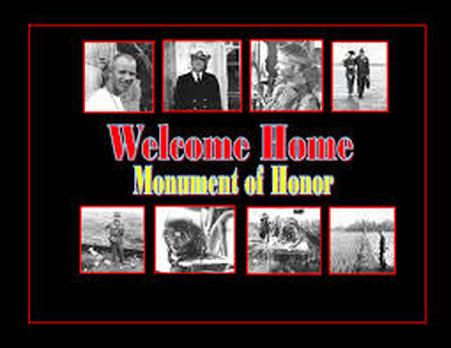
"Welcome Home/A Monument of Honor" was compiled by Ross Lewis, an Army veteran and former news photographer. Ross believes the real human stories of Americans involved in the Vietnam War were told through their personal non-combat photographs.
Snapshots reveal the underlying dignity, pride and compassion of the men and women who were in Vietnam, Ross says. The intimacy of their pictures as well as their poignant written memories stand as a legacy for us all.
There is no digital edition, but you can buy this full-color picture book directly from Ross at http://www.welcomemonument.com .
"Welcome Home/A Monument of Honor" was compiled by Ross Lewis, an Army veteran and former news photographer. Ross believes the real human stories of Americans involved in the Vietnam War were told through their personal non-combat photographs.
Snapshots reveal the underlying dignity, pride and compassion of the men and women who were in Vietnam, Ross says. The intimacy of their pictures as well as their poignant written memories stand as a legacy for us all.
There is no digital edition, but you can buy this full-color picture book directly from Ross at http://www.welcomemonument.com .
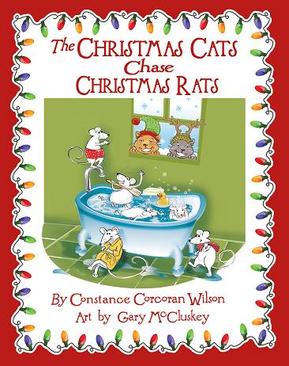
The very versatile Connie Wilson does it again! Here's a second adorable Christmas book from an author known for her horror stories, humor or young adult novels. Christmas Rats follows up on The Christmas Cats in Silly Hats, her first book written for young children. Each kid-tested book teaches a life lesson through an endearing story complemented by art from illustrator Gary McCluskey. Order directly from Connie for a signed copy, or get both books from Amazon.
This prolific author, columnist and blogger (http://www.weeklywilson.com/) is based in East Moline, Illinois.
This prolific author, columnist and blogger (http://www.weeklywilson.com/) is based in East Moline, Illinois.
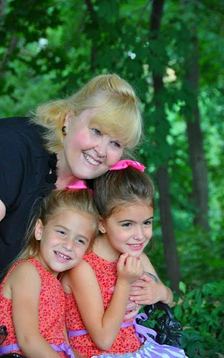
Connie Wilson and two of her granddaughters.
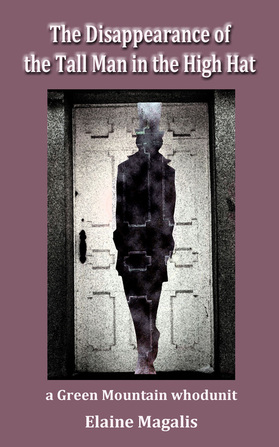
Mystery writer Elaine Magalis, who blogs at Late Fruit, keeps expanding her successful Green Mountain Whodunit series of cozy mysteries. Tall Man is her latest installment, continuing to follow amateur sleuths Tasha Mulholland, a retired librarian of-a-certain-age, and her young assistant, Alex. All Green Mountain Whodunits take place in or around an actual historic house and school in the Northeast Kingdom of Vermont. You can order this book directly from Elaine through her website, or buy from Amazon.
Here's a video shot in and around the Old Stone House in Brownington VT, to get you in the mood.
Here's a video shot in and around the Old Stone House in Brownington VT, to get you in the mood.
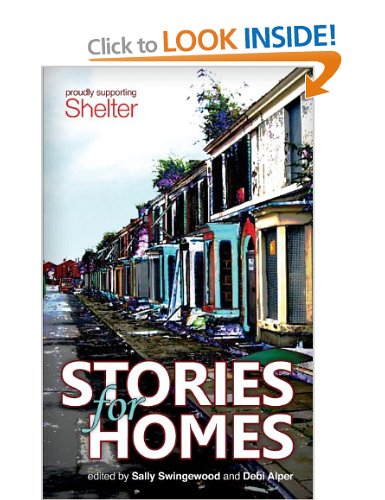
The US is not the only country dealing with homelessness. Great Britain has a serious problem, as well. Stories for Homes is a collection of short stories examining the concept of home from every angle. Created by a new community of people brought together to create a world-class collection of short fiction in all genres, all profits from sales of this book go to the homeless and housing charity Shelter. Look for the story Brick Heart by Manchester-based Jacqueline Ward, a long-time Birds reader and contributor.
Jacqui says Brick Heart is about an elderly woman facing housing problems, and the range of emotions she goes through. Every story in this anthology shines a light in the importance of home, and what it means to people.
Jacqui says Brick Heart is about an elderly woman facing housing problems, and the range of emotions she goes through. Every story in this anthology shines a light in the importance of home, and what it means to people.

Jacqui Ward
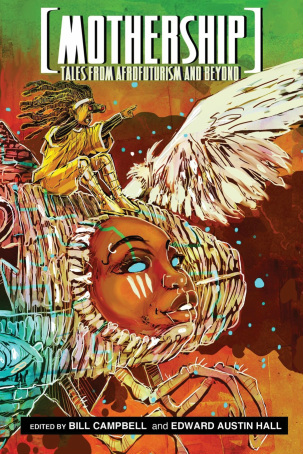
Our old friend novelist/humorist/raconteur from DC, Bill Campbell, recently founded Rosarium Publishing, then teamed up with Edward Austin Hall to compile an impressive collection of science fiction stories for its first publication. Mothership includes stories from the likes of Junot Daz, Lauren Beukes, Victor LaValle, N.K. Jemisin, S.P. Somtow, Tobias Buckell and other winners of the Pulitzer Prize, American Book Award, the Hugo, Nebula and Bram Stoker Award. Many of these writers may be new to you, as they were to me. But, Mothership is your invitation to get acquainted with them and their fascinating work.
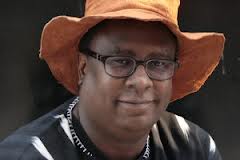
Bill Campbell
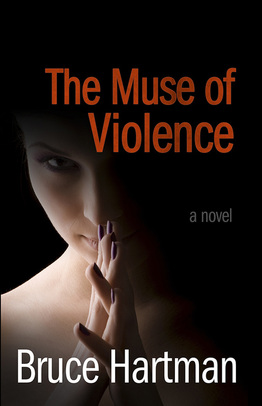
Bruce Hartman's books are winners! His first book, Perfectly Healthy Man Drops Dead, won the Salvo Press Mystery Novel Award in 2008. Kirkus Reviews named his second, The Rules of Dreaming, one of the best indie books of 2013. His newest, The Muse of Violence, recently placed at the top of the list in Amazon's Kindle store, #1 in mystery and #1 in crime fiction.
In The Muse of Violence, a chilling series of deaths strikes a writers' group in New York, leaving the remaining members to face the suspicion--and finally the terrifying certainty--that one of them is a psychopathic killer. They wonder: Is a sequel to Agatha Christie's And Then There Were None being played out in their lives?
Here's an excerpt:
“The writers’ group is just a memory now. I can still picture them sitting in my apartment—four women and two men in addition to myself—reading stories to each other in a search for fictional truth that seemed more important than real life. That was before death pulled up a chair and started spinning tales of its own. We were so naive, all we did was complain about the heat.”
Buy the book in digital form or as a large-format paperback directly from Amazon, or help keep your local bookstore in business by buying the hard copy there.
Retired attorney, musician and composer lives in Philadelphia.
In The Muse of Violence, a chilling series of deaths strikes a writers' group in New York, leaving the remaining members to face the suspicion--and finally the terrifying certainty--that one of them is a psychopathic killer. They wonder: Is a sequel to Agatha Christie's And Then There Were None being played out in their lives?
Here's an excerpt:
“The writers’ group is just a memory now. I can still picture them sitting in my apartment—four women and two men in addition to myself—reading stories to each other in a search for fictional truth that seemed more important than real life. That was before death pulled up a chair and started spinning tales of its own. We were so naive, all we did was complain about the heat.”
Buy the book in digital form or as a large-format paperback directly from Amazon, or help keep your local bookstore in business by buying the hard copy there.
Retired attorney, musician and composer lives in Philadelphia.

Bruce Hartman
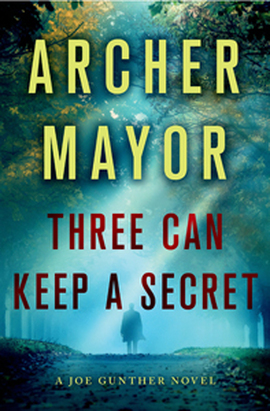
I've been looking forward to the publication of this book for two years and can't wait to read it. In his 24th book in the series, Vermont mystery writer Archer Mayor lets VBI Det.Joe Gunther loose on a case that takes place during Hurricane Irene, which, you may recall, devastated the state in late August, 2011. In the course of one weekend, roads virtually disappeared and bridges washed downstream, along with the hopes and dreams of thousands of Vermonters. In the midst of this chaos, the seasoned detective Joe Gunther is asked to solve a complex case "involving two corpses, one escaped mental patient and a long-held secret that binds them together."
Three Can Keep a Secret is available directly from Archer's webpage, from Amazon and from your local bookstore. He goes on book tours, so be on the lookout for one his book signings or very entertaining guest appearances in your area.
Three Can Keep a Secret is available directly from Archer's webpage, from Amazon and from your local bookstore. He goes on book tours, so be on the lookout for one his book signings or very entertaining guest appearances in your area.
Archer Mayor
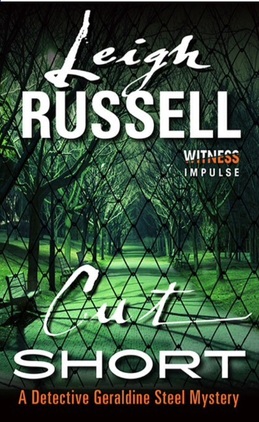
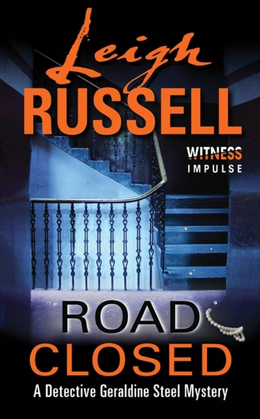
 Leigh Russell
 Britain's popular crime writer, Leigh Russell, has jumped the pond with her two earliest books featuring DCI Geraldine Steele, who might just be a cousin Prime Suspect's Jane Tennison.
US publishing houses have bought reprint rights to offer these mysteries to any American readers who don't already know her. When they do, they are sure to stick with this young author.
These two taut tales are still my favorites among her works, which hit best-seller lists as soon as they are released.
Buy digital versions or hard copies through the publishers by clicking on the book titles, above.
US publishing houses have bought reprint rights to offer these mysteries to any American readers who don't already know her. When they do, they are sure to stick with this young author.
These two taut tales are still my favorites among her works, which hit best-seller lists as soon as they are released.
Buy digital versions or hard copies through the publishers by clicking on the book titles, above.
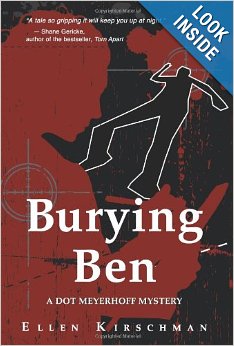
Ellen Kirschman is an award-winning public safety psychologist. She also is the author of the best-selling books I Love a Cop: What Police Families Need to Know, I Love a Fire Fighter: What the Family Needs to Know, and co- author of the forthcoming book, Counseling Cops: What Clinicians Need to Know. A pioneer in the field of police psychology, her workshops and seminars have taken her to twenty-two states and four countries. She is a lead clinician at the West Coast Post Trauma Retreat for first responders with post traumatic stress injuries and a member of the Police Psychology Sub-section of the International Association of Police Chiefs, the Society for Police and Criminal Psychology, and the International Association of Women in Policing.
Burying Ben, her first novel, is drawn from her years of experience working side by side with officers on the street and listening to their secrets in the confines of her consulting room. One reviewer praises Burying Ben for its "compelling characters in a tight-turning plot."
Follow the title link to Amazon, or look for the book at your local bookstore.
Ellen Kirschman lives and works in the San Francisco Bay Area.
Burying Ben, her first novel, is drawn from her years of experience working side by side with officers on the street and listening to their secrets in the confines of her consulting room. One reviewer praises Burying Ben for its "compelling characters in a tight-turning plot."
Follow the title link to Amazon, or look for the book at your local bookstore.
Ellen Kirschman lives and works in the San Francisco Bay Area.
Ellen Kirschman